Lucille Ball: The Extraordinary Life of America’s First Queen of Television Comedy
From a young performer who faced rejection to one of television’s most influential stars and executives, Lucille Ball built a career defined by persistence, comic invention and business vision.
Contents
Contents
- The Early Life of Lucille Ball
- Rejection and the Road to Hollywood
- Meeting Desi Arnaz
- Before I Love Lucy: My Favorite Husband
- The Birth of I Love Lucy
- Why Lucy Ricardo Was Unforgettable
- Lucy and Ricky
- Fred and Ethel Mertz
- The Chocolate Factory
- The Grape-Stomping Scene
- The Pregnancy Storyline
- Changing How Television Was Made
- Desilu Productions
- The End of I Love Lucy
- Life After I Love Lucy
- Awards and Recognition
- The Personal Side of Lucille Ball
- Why Her Comedy Still Works
- Her Influence on Women in Entertainment
- Final Years and Death
- The Legacy of Lucy
- Frequently Asked Questions
Advertisement
There are certain faces in television history that people never forget. A mischievous smile, expressive eyes, a perfectly timed reaction and a laugh that could brighten an ordinary evening: for millions of viewers, that face belonged to Lucille Ball.
Known to generations simply as Lucy, she became one of the most recognizable entertainers in American history. As Lucy Ricardo, she could turn an ordinary household chore into a disaster and a simple plan into an unforgettable comedy scene. But the woman behind the famous red hair was much more than a funny actress. She was a determined performer, a businesswoman and a creative force who helped change television.
1. The Early Life of Lucille Ball
Lucille Désirée Ball was born on August 6, 1911, in Jamestown, New York, and spent much of her childhood in nearby Celoron. Her father, Henry Ball, died when she was very young. Her mother, Desiree, and other family members helped raise her.
Ball developed an interest in performing early. As a teenager she went to New York City to study at the John Murray Anderson School of Dramatic Arts. The experience was not an instant success story: she was shy, struggled with confidence and later recalled feeling overwhelmed by the school environment. The early setbacks did not end her ambition.
2. Rejection, Struggles and the Road to Hollywood
Before becoming a television star, Ball tried different jobs and opportunities, including modeling and stage work. In 1933 she moved to Hollywood and began building a film career through small and supporting roles.
She appeared in many films during the 1930s and 1940s, gradually learning the craft of screen performance. For a time she was promoted as a glamorous blonde. Her later red hair became a signature part of her public image, but her comic talent took longer for the industry to fully recognize.
3. Meeting Desi Arnaz: A Partnership That Changed Television
Ball met Cuban-born musician, bandleader and actor Desi Arnaz while working on the film Too Many Girls in 1940. They married on November 30 of that year. Their relationship would become one of the best-known partnerships in entertainment history.

Arnaz brought musical and production experience; Ball brought years of acting and comedy experience. Their professional partnership eventually became the foundation of Desilu Productions and the success of I Love Lucy. Their real marriage inspired the broad premise of the television couple, though the fictional Ricardos were not a complete picture of their private lives.
4. Before I Love Lucy: The Radio Show That Started It All
Before television audiences met Lucy Ricardo, Ball starred as Liz Cooper in the CBS radio comedy My Favorite Husband, which began in 1948. The program showed that she could carry a comedy series and helped create a path toward television.
When a television adaptation was considered, Ball wanted Arnaz to play her on-screen husband. Some executives were uncertain about the idea, so the couple toured in a vaudeville-style act to demonstrate their chemistry. Their performances helped persuade decision-makers to give the partnership a chance.
5. The Birth of I Love Lucy
I Love Lucy premiered on CBS on October 15, 1951. Ball played Lucy Ricardo, Arnaz played Ricky Ricardo, William Frawley played Fred Mertz and Vivian Vance played Ethel Mertz. The setting was simple: two married couples, a New York apartment building and everyday problems that grew into comic chaos.
Lucy wanted to perform, become famous and take part in Ricky’s entertainment career. Her plans rarely worked as expected, but audiences loved her energy, ambition and ability to turn small situations into big comedy.
6. Why Lucy Ricardo Was Such an Unforgettable Character
Lucy was curious, determined, emotional and playful. She was not a perfect television wife, and she did not always follow the rules. She wanted to try new things and make a place for herself in show business. That ambition made her more than a collection of comic mishaps.
Ball’s physical expression was extraordinary. A raised eyebrow, a surprised look, an awkward movement or a perfectly timed pause could carry an entire scene. She understood that comedy did not always need a punchline; sometimes an expression was enough.
7. The Chemistry Between Lucy and Ricky
Lucy and Ricky’s relationship was central to the series. Ricky, a bandleader and performer, often became frustrated with Lucy’s schemes, especially when she tried to join his nightclub act. Their disagreements, misunderstandings and reconciliations gave the sitcom a familiar rhythm.
The fact that Ball and Arnaz were married in real life added interest, but the Ricardos remained fictional characters. The show presented a carefully constructed comic world rather than a documentary account of the couple’s marriage.
8. Fred and Ethel Mertz: The Neighbors Who Became Family
William Frawley’s Fred was practical, sarcastic and frequently impatient with Lucy’s plans. Vivian Vance’s Ethel was Lucy’s closest friend and often her partner in trouble. Together, the Mertzes gave the series a second couple to react to the Ricardos’ adventures.
Their friendship, arguments and comic timing made the fictional building feel like a real community. Without Fred and Ethel, the show’s balance would have been very different.
9. The Famous Chocolate Factory Episode
In “Job Switching,” Lucy and Ethel take jobs wrapping chocolates on a conveyor belt. The task seems manageable until the belt speeds up and the chocolates arrive faster than they can wrap them. Their increasingly desperate attempts to keep up turn a simple factory job into a comedy classic.
The sequence relies on timing, expressions and escalating physical action rather than elaborate effects. Ball and Vance make an ordinary task feel wonderfully unpredictable.
10. The Grape-Stomping Scene
In “Lucy’s Italian Movie,” Lucy visits a vineyard and takes part in grape stomping. The scene turns into a physical struggle in the grape vat and remains one of Ball’s most recognizable comic performances.
She was willing to look ridiculous for a laugh. That commitment—using her whole body to tell a story—helped distinguish her from many performers of her era.
11. The Pregnancy Storyline That Made Television History
When Ball became pregnant in real life, television standards made the subject difficult to address openly. The writers avoided the word “pregnant” and handled the storyline carefully. Lucy Ricardo’s pregnancy became part of the series, culminating in “Lucy Goes to the Hospital.”
The episode aired on January 19, 1953, the same day Ball gave birth by cesarean section to her son, Desi Arnaz Jr. Historical accounts estimate that about 44 million viewers watched the broadcast, making it a landmark television event. The fictional and real-life births took place on the same date—not the day before.
12. Lucille Ball and Desi Arnaz Changed How Television Was Made
The success of I Love Lucy was not only about acting. Ball and Arnaz wanted a durable filmed program rather than a live broadcast that would be difficult to preserve for repeat showings. The series was filmed on 35mm film in front of a live studio audience using a three-camera method.
This approach preserved the energy of a live performance while producing a consistent picture for viewers. Because episodes were filmed, they could be shown again. The production model became influential in the development of television sitcoms.
13. Desilu Productions: Lucille Ball the Businesswoman
Ball and Arnaz established Desilu Productions in 1950. The company produced I Love Lucy and grew into a major television studio. After their divorce, Arnaz sold his share to Ball, who became the company’s sole owner and later its president in 1962.
Desilu was associated with influential series including Star Trek, Mission: Impossible, The Untouchables and The Andy Griffith Show. Ball’s leadership was especially significant in an industry where senior studio roles were overwhelmingly held by men.
14. The End of I Love Lucy
The original I Love Lucy series ended in 1957 after six seasons. Lucy and Ricky continued in longer specials known as The Lucy-Desi Comedy Hour, which ran from 1957 to 1960.
Ball and Arnaz divorced in 1960. Their personal relationship had ended, but the creative partnership they built had already changed television history.
15. Lucille Ball Continued Her Success After I Love Lucy
Ball returned to television with The Lucy Show in 1962, which ran until 1968. She followed it with Here’s Lucy, which ran from 1968 to 1974 and featured her children, Lucie Arnaz and Desi Arnaz Jr., in the cast.
In 1986 she returned with Life with Lucy. The series was short-lived, but her career had already spanned decades and included an unusually long run as a leading television performer.

16. Awards and Recognition
Ball won four Primetime Emmy Awards and was among the first inductees into the Television Academy Hall of Fame in 1984. She received the Kennedy Center Honors in 1986 and was posthumously awarded the Presidential Medal of Freedom in 1989.
These honors recognized not only her popularity but also her influence on comedy, television production and the entertainment business.
17. The Personal Side of Lucille Ball
Ball and Arnaz had two children, Lucie Arnaz and Desi Arnaz Jr. After their divorce, Ball married comedian Gary Morton in 1961. Her private life included happiness and difficulty, and it was more complicated than the cheerful television personality audiences knew.
Her public image and her private experiences were not the same thing. The distinction is worth remembering when looking back at the real woman behind Lucy Ricardo.
18. Why Lucille Ball’s Comedy Still Works Today
Television now offers streaming, smartphones and countless entertainment choices, but the foundations of Ball’s comedy remain familiar. Audiences still understand embarrassment, misunderstandings and the small mistake that grows into a much bigger problem.
Her comedy depended on human behavior rather than technology. That is why viewers born decades after the original broadcasts can still laugh at the same scenes.
19. Lucille Ball’s Influence on Women in Entertainment
Lucy Ricardo was ambitious, curious and determined to participate in a world beyond her home. She was allowed to be imperfect, make mistakes and drive the story through her own decisions.
Behind the camera, Ball’s leadership at Desilu offered an equally powerful example. She demonstrated that a woman could lead a major television studio and make consequential creative and business decisions.
20. The Final Years and Death of Lucille Ball
Ball underwent heart surgery in April 1989. She died in Los Angeles on April 26, 1989, at the age of 77, following a ruptured aorta. Her death prompted tributes from fans, fellow performers and people who had grown up watching her work.
She was laid to rest in Jamestown, New York, a place closely connected to her childhood. Her performances continued to reach audiences long after her death.
21. The Legacy of Lucy: A Star Who Never Really Left
More than seven decades after I Love Lucy premiered, Ball remains a major figure in television history. Her influence can be seen in sitcom production, physical comedy and the opportunities available to women in entertainment.
She was rejected early in her career, worked through years of uncertainty and eventually became one of the most successful entertainers of her generation. When she reached the top, she did not limit herself to performing: she helped build the business behind the entertainment.
Lucille Ball was not just the woman who made America laugh. She was one of the women who helped build modern television.
Frequently Asked Questions About Lucille Ball
1. When was Lucille Ball born?
She was born on August 6, 1911, in Jamestown, New York.
2. What was Lucille Ball most famous for?
She was best known for playing Lucy Ricardo in the sitcom I Love Lucy.
3. Who was Lucille Ball’s husband?
She was married to Desi Arnaz from 1940 until their divorce in 1960. She later married Gary Morton.
4. When did I Love Lucy first air?
The series premiered on CBS on October 15, 1951.
5. Who played Ricky Ricardo?
Desi Arnaz played Ricky Ricardo.
6. Who played Fred and Ethel Mertz?
William Frawley played Fred Mertz, and Vivian Vance played Ethel Mertz.
7. How many children did Lucille Ball have?
She had two children: Lucie Arnaz and Desi Arnaz Jr.
8. Was Lucille Ball naturally a redhead?
No. Her famous red hair was a dyed look that became her trademark.
9. Did Lucille Ball own a television studio?
Yes. After buying out Desi Arnaz’s share of Desilu Productions, she became its sole owner and later its president.
10. What famous shows were associated with Desilu?
Desilu was associated with shows including Star Trek, Mission: Impossible, The Untouchables and The Andy Griffith Show.
11. When did Lucille Ball die?
She died on April 26, 1989, at the age of 77.
12. Why is Lucille Ball still remembered?
She is remembered for her comic performances, pioneering work in television production and influence on generations of performers and producers.
Sources and Further Reading
- Library of Congress: Lucille Ball and Desi Arnaz Papers — biographical timeline and career milestones.
- National Women’s History Museum: Lucille Ball — early life and career.
- Television Academy: Lucille Ball Hall of Fame Tribute — career and television legacy.
- HISTORY: Lucille Ball gives birth on TV—and in real life — the January 19, 1953 broadcast and birth.
- Library of Congress: I Love Lucy — An American Legend — the series and its place in television history.
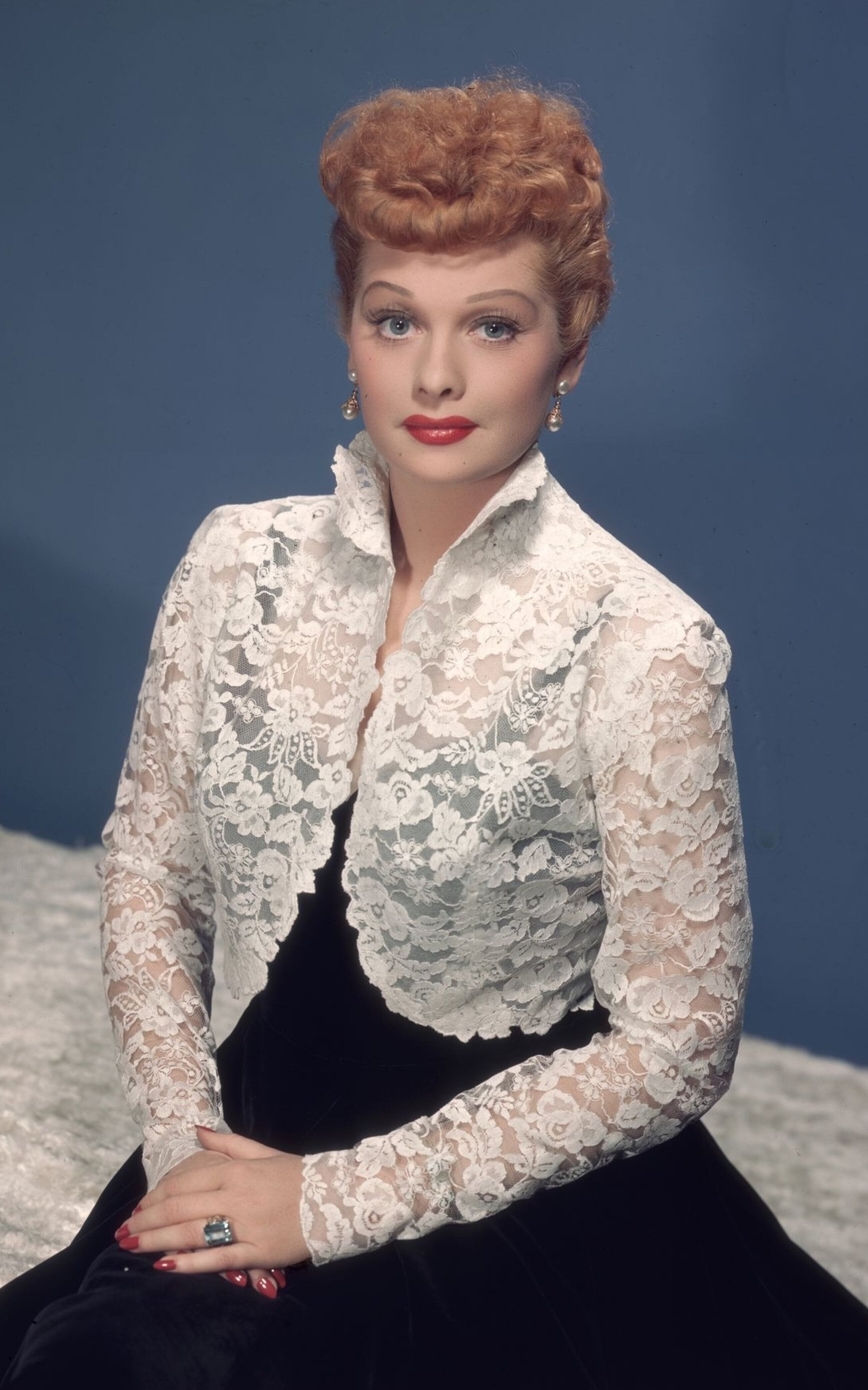
Image credits: The 1955 Lucille Ball publicity still and the 1952 Lucille Ball–Desi Arnaz photograph are linked to their Wikimedia Commons file pages, where their stated public-domain status and source details can be reviewed.
Advertisement
Related articles
The History of I Love Lucy: How a Sitcom Changed American Television
How a filmed sitcom and a four-person ensemble changed the television landscape.
Understanding Lucy Ricardo: The Character Behind the Comedy
A closer look at the ambition and comic instincts behind Lucy Ricardo.